Spring has a way of bringing out the best in dogs. The temperatures climb, the smells get impossibly interesting, and suddenly, your pup is nose-to-the-window every morning, ready to go. The temptation is to jump straight back into high-activity mode, but doing so too fast can work against you. Muscles decondition over winter, tick populations surge, toxic spring plants are everywhere, and dogs with seasonal allergies may be itchier than you realize. Schedule a spring vet visit before ramping up, especially if your dog is a senior or managing a health condition.
Here are ten spring activities to do with your dog that deliver real enrichment, giving your dog meaningful physical exercise and mental stimulation (or social connection) while keeping seasonal risks in mind.
1. Decompression Walks
A decompression walk is a slow, unstructured outing where your dog leads and sets the pace. No heel commands, no redirecting away from interesting smells. That free-sniffing time does a lot for your dog. Research in canine behavior suggests that scent-focused activity promotes a calm, satisfied state, and dogs who finish a session often show the same settled behavior as they would after a significantly longer walk. Spring makes these walks especially rewarding, with blooming plants, thawing ground, and animals re-emerging after months underground.
Spring safety note: Tulips, daffodils, and hyacinths are among the most common toxic hazards this time of year. Keep your dog on a long line near ornamental plantings. Watch for sneezing, paw-licking, or itchy skin after outings, which can signal seasonal allergies.
Modifications: Anxious or reactive dogs do best in quieter natural settings rather than busy parks. For high-energy dogs, use a long line to give them range without sacrificing control.
2. Dog-Friendly Garden Center Visits
Many garden centers and nurseries welcome leashed dogs, and spring is precisely when you should take them up on it. Rows of blooming plants, open soil displays, and bags of mulch and compost create a scent profile unlike anything in your neighborhood. It’s also a practical errand your dog can join, which matters for owners who struggle to carve out dedicated enrichment time.
Spring safety note: This is the most plant-hazard-dense environment on this list. Keep your dog close on a short leash and away from loose soil, low display tables, and open bags of product.
Modifications: This is low-impact enough for seniors and low-mobility dogs. High-drive dogs still get plenty of stimulation without needing to move fast.
3. Farmer’s Market Visits
A farmer’s market is essentially a decompression walk in a structured setting. Your dog moves at a meandering pace, encounters dozens of new smells, and meets strangers who are happy to say hello. That kind of controlled exposure to novel environments builds real confidence over time, especially in younger or less worldly dogs.
Spring safety note: Markets often sell spring bulbs. Tulips and daffodil bulbs are toxic and easy for a curious dog to mouth. A four-foot leash gives you better control in tight spaces than a retractable.
Modifications: Dogs prone to overwhelm do better at a quiet weekday market than a busy Saturday crowd.
4. Dog-Friendly Patios and Breweries
A dog-friendly patio outing gives your pup controlled exposure to a busy, unpredictable environment. There are unfamiliar people, passing dogs, and lots of ambient noise. Bring a mat or blanket your dog associates with settling, and keep first visits short, around 45 minutes, so your dog leaves the experience before getting overstimulated.
Spring safety note: Pavement heats up faster in spring than most owners expect. Check that the surface isn’t uncomfortably warm before having your dog lie down.
Modifications: If your dog is reactive or anxious around strangers, start with a quiet coffee shop patio on a slow morning rather than a busy Saturday brewery crowd.
5. Backyard Agility
You don’t need a competition course. Pool noodle jumps, a fabric tunnel, and a few cones for weaving are enough to build focus, coordination, and the problem-solving satisfaction dogs love. Agility burns energy efficiently because mental focus plus movement is more tiring than movement alone. Start simple: one obstacle at a time, short sessions of 5 to 10 minutes, and plenty of positive reinforcement throughout.
Spring safety note: If you’ve recently fertilized your lawn or applied herbicides, wait 48 to 72 hours before letting your dog play on it. Many lawn chemicals are irritants when ingested through paw-licking.
6. Geocaching
Geocaching is a GPS-based outdoor treasure hunt with millions of hidden containers logged at locations worldwide. You use a free app to find coordinates, navigate to the spot, and locate the cache. Your dog comes along for the whole thing and is often better at zeroing in on the hiding spot than you are. It turns a regular dog walk into a shared mission.
Spring safety note: Cache locations are often in wooded or grassy off-trail areas, which are exactly where ticks thrive in spring. Check your dog thoroughly after every outing, make sure parasite prevention is current, and carry water for both of you since off-trail routes often run longer than expected.
Modifications: Filter for terrain ratings of 1 to 1.5 for flat routes suited to senior dogs. String multiple caches together for a longer outing if your dog has energy to burn.
7. Swimming and Water Play
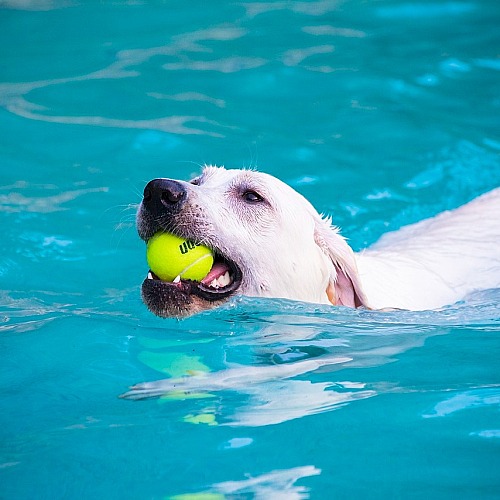
Swimming works the full body, is easy on joints, and tires even high-energy breeds efficiently, making it one of the most complete forms of exercise you can offer a dog. For those managing orthopedic conditions or recovering from injury, it’s especially valuable. Early spring water can be deceptively cold, so test it before your dog goes in.
Spring safety note: Avoid any natural body of water with visible surface scum, foam, or floating mats, which may indicate a harmful algal bloom. There is no way to tell by appearance alone whether blue-green algae is present or toxic. Check local advisories before letting your dog swim in an unfamiliar lake or pond. Rinse your dog with clean water after any swim in a natural source.
Modifications: A backyard kiddie pool is an excellent starting point for dogs who have never encountered water.
8. Nose Work and Scent Classes
Nose work trains dogs to identify a target scent, typically birch, anise, clove, or cypress, and find it when it’s hidden in boxes, vehicles, or outdoor spaces. The mental effort of sustained scent detection is genuinely tiring, and dogs who finish a session are often visibly satisfied. Spring is when many training clubs launch beginner cohorts and move practices outdoors.
Spring safety note: Outdoor nose work practice in spring means your dog is spending extended time with their nose to the ground. Be deliberate about where you set up search areas, and avoid fields with recent pesticide application.
Modifications: Every dog type can do this, including reactive dogs, seniors, puppies, and dogs recovering from injury. No fitness prerequisite needed.
9. Dog Sport Introduction
Spring is when dog sport clubs reopen for the season, and most hold open intro days for newcomers. The options for structured activities to do with your dog are wider than many owners realize. Dock diving, lure coursing, flyball, and agility trials all have beginner-friendly entry points. Beyond the physical intensity, dog sports build focused drive and handler-dog teamwork that few other activities match.
Spring safety note: Coming out of a low-activity winter, joints need time to adapt. Start with shorter sessions, and build gradually before any full-effort runs.
Modifications: For dogs new to organized sport, start with a single intro day rather than committing to a full training program. Senior dogs or those with joint issues should skip high-impact options like dock diving; nose work and rally obedience offer the same competitive structure without the physical demand.
10. Sensory Garden and Outdoor Enrichment
This one tends to get overlooked, and that’s a shame. A sensory garden is an outdoor space set up to engage your dog’s nose, eyes, and body in novel ways. Raised herb beds of dog-safe varieties, shallow digging boxes, hidden treats in garden containers, or kibble scattered through grass for foraging all count. You don’t need a full garden. A few planters on a balcony or patio will do. Rotate what’s planted or hidden to keep the experience fresh.
Spring safety note: Verify that every plant in your dog’s accessible space is non-toxic before planting. The ASPCA’s toxic plant database is the most comprehensive reference available.
Modifications: This one works at any pace and any scale. For seniors or low-mobility dogs, a single planter with hidden treats is plenty. For high-drive dogs, increase the complexity of the hides, and rotate the scents frequently to keep them challenged.
Make Spring Count
The best spring activities to do with your dog aren’t necessarily the most intense ones. They’re the ones that give your dog something meaningful, whether that’s physical release, mental engagement, confident exposure to the world, or simply time beside you in the sunshine.
Spring doesn’t last long. Pick a few activities from this list, stay consistent, and pay attention to what genuinely lights your dog up. That’s your roadmap for the season.
This article is for informational and educational purposes only. Seasonal hazards, plant toxicity, and regional conditions vary. Consult your veterinarian before making significant changes to your dog’s activity level, particularly if your pet has existing health conditions.





Leave a Comment
Your email address will not be published. Required fields are marked *